NAV / 01

Ship navigation and deck infrastructure

Read a cruise ship as a practical environment: use deck numbers, zones, landmarks and vertical routes to move between the spaces that shape your day.

A ship is organised in layers and zones rather than as one continuous hotel. Numbered decks stack vertically, while forward, midship and aft describe where you are along its length. A cabin number helps, but you will usually find a place faster by pairing its deck with direction and a visible landmark. Deck layouts, facility locations and access arrangements vary by vessel and sailing, and public spaces can span more than one deck. Start with the deck, identify the zone, then choose the nearest lift or stair bank.

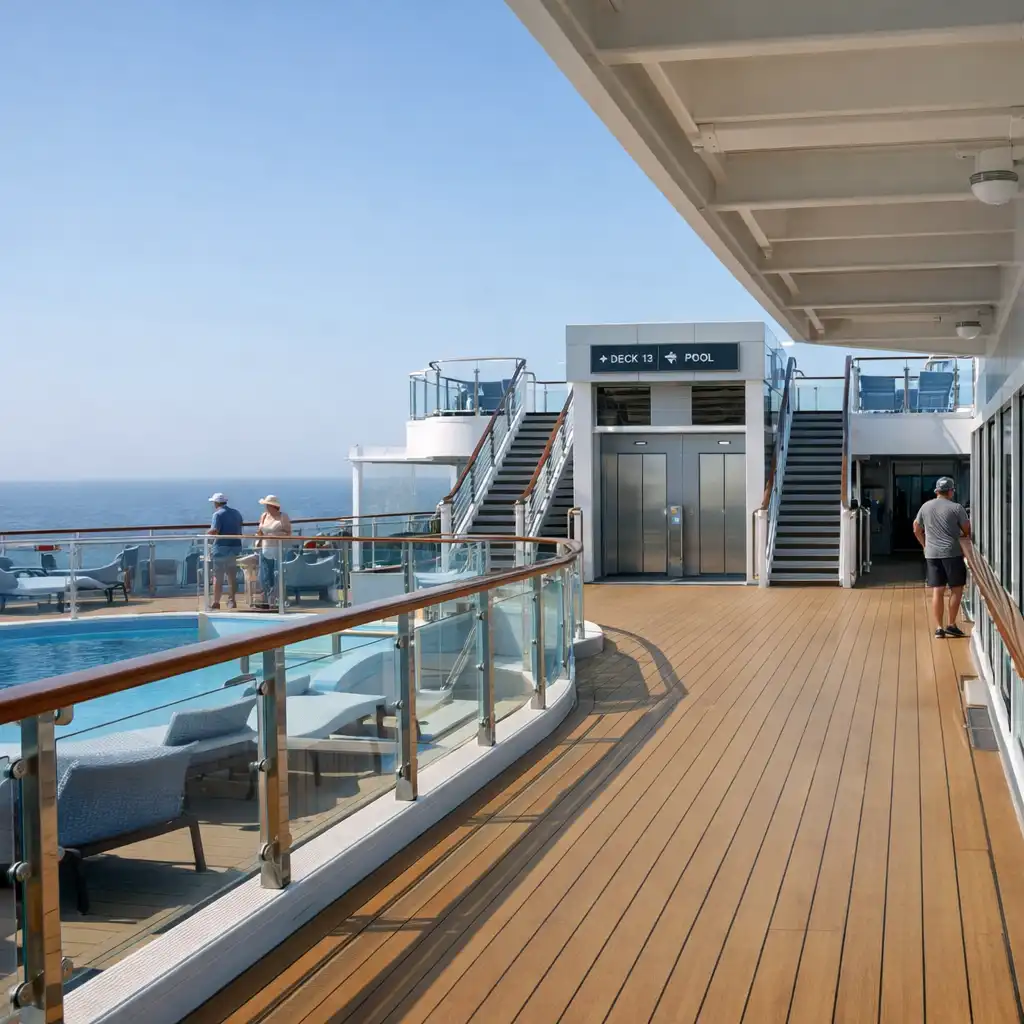
Cruise ship upper-deck walkway leading towards passenger circulation access and railings
Use a recognisable route feature, such as a lift lobby, stair tower or deck edge, as a return landmark.
NAV / 02

The ship from bottom to top

Most vessels follow a broad vertical pattern, but the useful detail is always the plan for your own ship.

LOWERDeck band

Lower decks: cabins, embarkation and operations

Lower passenger-accessible decks may hold accommodation, gangway access at some ports, selected services or public facilities. Much of a ship’s operational infrastructure remains crew-only and is not part of a passenger route. The embarkation level can change with port facilities and tide conditions, so follow signs and crew directions at the gangway rather than relying on a previous stop.

Route note

When leaving the ship, use the announced gangway route and return through the indicated passenger entrance.

MIDDLEPublic core

Middle decks: the daily public core

Reception, dining, lounges, shops and entertainment venues often cluster around central public decks. These areas tend to offer the richest collection of landmarks and can make useful cross-ship routes. Placement differs by ship, and a multi-level venue may have entrances on different decks, so check both the deck number and the entrance location before setting off.

Midship cue

A known central lobby can be a reliable reset point when a corridor or venue entrance is unclear.

UPPEROpen air

Upper decks: outdoor activity and open-air routes

Upper decks commonly combine pools, sun areas, sports spaces, walking routes and outdoor bars. They can be efficient routes in fine weather, but wind, rain and strong sun can change the experience. Outdoor access may also be affected by maintenance or operational conditions, so use an indoor alternative if a path is closed.

Check conditions

Wet gear, wind and weather can make an indoor lift route the more practical choice.

TOPObservation

Top-deck observation and route logic

The highest accessible decks may offer observation, recreation or a through-route, but they are not always a complete walk from bow to stern. Equipment, private areas and vessel design can interrupt the route. If an outdoor path ends, return to a known lift lobby instead of assuming another connection continues ahead.

Practical cue

Use the next signed vertical route rather than crossing an unfamiliar restricted-looking area.

NAV / 03

Find your position with ship directions

Directional terms are working tools for reading signs and comparing locations, not nautical trivia.

ForwardMidshipAft

Forward, midship and aft

Forward is toward the front, midship is the centre and aft is toward the rear. These terms are especially useful when a cabin and venue appear on the same deck plan: a long same-deck walk can still take time. Where signs make it clear, choose a lift bank that already matches your intended direction.

Port Starboard

Port and starboard

Port is the left side and starboard is the right side when you are facing forward. You may see these labels on deck plans, muster information or directional signs. Read them alongside the ship’s forward direction, rather than treating left and right as fixed from your current viewpoint.

  1. VenueRead the name first.
  2. DeckConfirm the level.
  3. ZoneCheck forward, midship or aft.
  4. RouteChoose a stair or lift bank.

Read signage as a sequence

Follow venue name, deck number, direction and then the nearest vertical route. This sequence reduces unnecessary crossings and repeated deck changes. Colour, carpet pattern or artwork can become secondary landmarks on some ships, but signage conventions and visual cues differ between vessels.

NAV / 04

Vertical circulation: lifts, stairs and accessible routes

The best route is the one that suits the distance, the moment and the traveller.

Lift banks are navigation anchors

Lift lobbies are more than transport. They are repeatable landmarks that connect several decks and help you retain a sense of position. Notice whether a lobby is forward, midship or aft before walking away from it. Allow extra time around meals, shows and embarkation periods, when passenger flow can affect waiting times. Follow posted capacity and accessibility guidance.

Stairs can shorten a short deck change

For one or two deck changes, stairs may be quicker when they suit the traveller. They should never be treated as the default for everyone: mobility needs, luggage, children, fatigue and current conditions all matter. During drills or emergencies, follow onboard guidance and crew directions rather than relying on a preferred everyday route.

  • Choose stairs only where they are comfortable and appropriate for you.
  • Use the signed route if a crew member directs passengers another way.
NAV / 05

Public zones and the daily rhythm of the ship

Location patterns help, but timing often decides whether a route feels simple or crowded.

Zone / accommodation

Accommodation corridors

Cabin decks can be quiet, repetitive and long. Note the nearest lift lobby, stair tower and corridor direction before heading out, because cabin areas may sit above, below or apart from busy public decks. Cabin numbering conventions vary by vessel, so check a deck plan rather than inferring an exact position from the number alone.

Best landmark
Lift lobby or stair tower
Planning note
Confirm deck and direction before leaving.
Zone / social

Dining, bars and lounges

Food and drink venues often cluster around central public decks, atriums or promenade-like routes, but they may be split across decks and entrances. Main dining, speciality dining, casual food, bars and lounges can all follow different access patterns. Arrive early when a booking, show or meal time matters, as direct lift routes may slow at peak periods.

Best landmark
Central public lobby
Planning note
Hours and reservations vary by sailing.
Check onboard

Entertainment and casino areas

Theatres, lounges and casino areas are often reached from public-deck circulation routes and can create concentrated traffic before or after performances. Treat a casino as one entertainment area alongside theatres and lounges. Casino opening times, age requirements and access conditions can vary by ship and itinerary, so check current onboard notices for operating details.

Best landmark
Venue entrance or public lobby
Planning note
Confirm access details before you go.
Zone / outdoor

Pools, family spaces and outdoor decks

Pools, family facilities and outdoor recreation areas often draw passengers towards upper decks, particularly on sea days. Separate adult, family or sheltered zones depend on the ship. Outdoor access can change with weather and operations, so a known indoor route is useful when travelling with young children or carrying wet gear.

Best landmark
Pool deck or upper lift lobby
Planning note
Check weather-aware route options.
NAV / 06

Infrastructure you will notice—and infrastructure you will not

Passenger-facing features can make a route easier to read; operational areas remain outside the guest pathway.

01Open deck

Promenades, open decks and viewing edges

Exterior walkways, railings, observation areas and open deck edges can work as scenic routes and useful directional references. Access may be interrupted by design, weather or operational needs. Follow temporary closure signs and choose an interior connection when conditions make an outside path less practical.

What it helps with

  • Confirming forward or aft position
  • Finding an upper-deck landmark
02Support point

Service counters and practical support points

Reception, shore-excursion desks, guest services, medical access points and venue hosts can be useful places to ask for directions or resolve daily questions. Exact services and locations vary by vessel and sailing. A deck directory is often the quickest starting point before joining a queue, especially when you only need to confirm a venue or deck.

Ask here

Use a passenger-facing counter for current directions, service locations or event access questions.

03Access boundary

Safety equipment and restricted areas

Safety equipment, crew work areas, bridge-adjacent spaces and operational zones are part of the ship’s infrastructure but are not routes for guests. Muster and emergency procedures are vessel-specific. Rely on required safety briefings, posted instructions and crew direction rather than treating restricted areas as shortcuts.

Keep in mind

Passenger access is limited to signed public areas and current crew guidance takes priority.

NAV / 07

Route examples for a typical day

Plan the next decision, not every corridor, then confirm current details onboard.

01

Cabin to breakfast, then shore departure

Leave your cabin via the nearest known lift or stair point, confirm the dining deck and entrance, then allow time to return or continue to the announced shore-departure location. Dining and shore arrangements vary by vessel, port and sailing, so check same-day onboard announcements before leaving breakfast.

Before you leaveCheck meeting time, deck and location.
02

Pool deck to an evening show

Allow transition time from an upper outdoor deck to an indoor venue. Wet gear, lift queues, a deck change and an entrance positioned away from the obvious lobby can all add time. If timing matters, locate the theatre or lounge entrance earlier in the day and allow for weather-driven route changes.

Time markerUse an indoor route if outdoor paths are closed.
03

Dinner to lounge or casino entertainment

Before leaving dinner, check whether the evening venue is on the same deck, one deck above or below, and whether it is forward, midship or aft. A nearby central landmark helps groups regroup. Casino access, opening details and age requirements can vary by ship and itinerary, so check onboard information.

Check onboardConfirm current casino access and operating details.
NAV / 08

Deck plans: what to check before you sail

Use a vessel-specific deck plan to identify the details that will save time on boarding day.

01Routes

Locate your cabin and two vertical routes

Identify the cabin deck and position, then note the nearest lift or stair option and a backup route. This is helpful when a preferred lobby is busy or one end of the ship is farther away than expected. Record both the deck number and direction; deck connections and vertical-route placement vary by vessel.

02Plans

Mark the spaces tied to your plans

Locate dining venues, meeting points, family facilities, pools, theatre or lounge entrances, services and any entertainment areas you expect to use. There is no need to memorise the whole ship. Casino areas are simply one optional entertainment location. Check current onboard schedules after boarding because access, hours and events can vary by sailing.

03Breaks

Look for route breaks and access notes

Deck plans can show where a corridor ends, an outdoor route does not continue, a venue has a separate entrance or an area is restricted. These details matter more than decorative labels when planning a return journey. Access routes can change due to operations, weather or vessel procedures, so check current notices if a path changes.

04Confirm

Confirm details after boarding

Pre-cruise plans are a starting point. Current onboard signage, daily information and crew direction take precedence when same-day details change. Check onboard before relying on an earlier route or venue time.

NAV / 10

A simple first-day orientation routine

Walk one useful loop before the ship gets busy. From your cabin, visit the nearest lift or stair point, a central public landmark and one planned venue, then find your way back. Keep it low-pressure and choose lifts or accessible routes as needed. Route choices should suit the traveller and current onboard guidance.

  1. 01

    Deck number

    Check the level before you start moving.

  2. 02

    Ship position

    Note forward, midship or aft.

  3. 03

    Vertical route

    Choose a suitable lift or stair bank.

  4. 04

    Landmark

    Keep one clear return reference in mind.

  5. 05

    Current information

    Follow onboard notices and crew direction when details change.