Route 00 / General life at sea

Onboard Experience Resources

Aboard Compass is an Australia-focused informational cruise-ship portal. Use this structured reference to understand how cabins, food and drink, pools, entertainment, family areas, services, decks, navigation and casino spaces connect from embarkation through sea days and port calls.

Check onboard

Layouts, opening windows, inclusions and access rules can vary by ship, itinerary and sailing. These resources describe common patterns, so cross-check the daily program, deck plan, venue signs and crew advice for the current arrangements on your vessel.

Directory / 01

Choose your starting point

Begin with the question that will make your trip easier to plan. Each route explains the practical decisions behind a space, rather than treating the ship as a generic holiday setting.

Living / 01

Sleep, eat and settle in

Compare cabin position, restaurant formats, dress expectations and quieter social spaces when everyday comfort is your first concern. A useful starting route for first-time researchers.

Read the cabins and spaces guide
Services / 02

Find facilities and practical support

Explore pools, family areas, fitness, guest services, medical support, accessibility questions and day-to-day facilities. Check their deck location and access arrangements alongside the plan.

Read the facilities guide
Routes / 03

Read the ship like a map

Learn deck numbering, stair and lift banks, public-space flow and outdoor access. Finding nearby-space relationships early makes the rest of the ship easier to use.

Read the navigation guide
Program / 04

Understand entertainment areas

Theatres, lounges, activity venues and late-evening options each have their own atmosphere, reservations, noise level and age expectations. Programs can change across sea days and ports.

Explore onboard spaces
Family / 05

Plan family and pool time

Start with family areas, pool decks, supervised programs and shared outdoor spaces. Age bands, supervision, weather and operating hours can all affect how a space is used.

See facilities and services
Casino / 06

Explore casino spaces responsibly

Find practical context for casino rooms, poker, roulette, blackjack, gaming tables and chips as one evening entertainment area. Age limits, games, opening times and policies vary, so check onboard.

Read the cruise casino guide
Daily rhythm / 02

How a day at sea takes shape

A ship works as a sequence of connected decisions: where you are, what is open, how long it takes to move there and whether a plan needs booking. Sea days and port days often have a different pace.

01 / Morning

Orient, eat and choose a pace

Mornings often begin with cabin routines, breakfast choices, pool or fitness activity, port preparation and a first check of the day’s program. Find your nearest stair or lift bank, note breakfast opening windows and allow for the fact that port days and sea days can shift activity availability.

  • Check the current program before leaving the cabin.
  • Use deck labels rather than memory when setting a meeting point.
02 / Midday

Move between shared spaces

Lunch, pool decks, lounges, family areas, talks, shopping and service desks can concentrate foot traffic around central public decks. If a popular venue is busy, use the deck plan to find a quieter alternative. Weather can also change how outdoor decks and nearby indoor venues are used.

03 / Afternoon

Plan rather than drift

Afternoon can be useful for reservations, activity sign-up, fitness or spa planning where offered, reading, family programs or simply selecting a quieter lounge. Check whether an activity needs booking or has capacity limits, and keep companions aligned on meeting points and deck locations.

04 / Evening

Match venue to mood and timing

Dinner, theatre performances, lounges, deck activities and casino areas can have different start times, dress expectations, access conditions and noise levels. Check the daily program before committing to a meal or show time. Casino spaces are one optional evening venue; use the dedicated guide for venue-specific context.

Live information

The onboard daily program is the most useful current source for opening windows, event times, venue changes, dress notes, port instructions and reservation reminders. Pair it with the deck plan and venue signage. This page is a planning framework, not a replacement for current onboard information: check onboard.

Wayfinding / 03

Deck plans, signage and nearby-space awareness are practical tools. Use them together before a reservation, show or departure rather than trying to reconstruct a route while a corridor is busy.

Start with your home deck

Note your cabin deck, cabin-side lift or stair bank and the direct route to key shared areas soon after boarding. When available, identify one interior and one exterior route. Cabin number patterns and deck-plan labels are more reliable than relying on memory alone.

  1. Cabin area and nearest vertical route
  2. Dining or meeting destination
  3. A clear route back after an event

Use landmarks, not only deck numbers

Restaurants, theatres, atriums, pool decks, service desks and lift banks can be useful landmarks on larger ships with several public decks. Where supplied, notice whether a venue is forward, midship or aft. Layouts differ between vessels, so confirm the labels on your own ship.

Leave time for vertical travel

Allow extra time when moving between decks for dining reservations, performances, shore departure or popular activities. Lifts can be busier at common transition points. Use stairs only where comfortable and appropriate, and check onboard for the route that suits your needs.

Venue reading / 04

Spaces work differently at different times

A venue name is only the beginning. Consider its access, atmosphere, location and current operating information before deciding whether it suits the moment.

Access

Access and inclusions

A venue may be open to all guests, linked to a booking, age condition, package, additional charge, cabin category or specific event window. Read signs and program notes before assuming access; the arrangement can vary by vessel and sailing.

Atmosphere

Atmosphere and sound

A central atrium, quiet lounge, theatre foyer, pool deck, family zone and casino room can feel markedly different despite all being public spaces. Think about lighting, conversation level, live music, crowd flow and time of day when choosing where to spend time.

Location

Location and nearby spaces

Proximity affects convenience: dining near a theatre may suit an evening plan, while a lounge near a service desk can help when waiting or meeting. Check whether a deck transition is needed between booked activities instead of assuming a standard arrangement.

Timing

Timing and changeability

Published information is only part of the picture. Weather, port calls, maintenance, private functions, sea conditions and the daily program can affect what is open or where an activity occurs. Check onboard and adjust with the current information rather than feeling caught out.

Varies
Embarkation mindset / 05

Build a calmer first-day plan

A short orientation sequence can make the first hours aboard feel more manageable without replacing current ship instructions.

01 / Orient

Locate the essentials first

Identify the cabin area, nearest stair or lift bank, guest services location where available, dining information and the day’s program before trying to see every deck. A simple orientation loop is more useful than rushing through the whole ship.

  • Keep current ship instructions as the authority.
  • Choose one useful landmark near the cabin.
02 / Confirm

Confirm the plans that have a time

Check dining assignments or reservations, entertainment times, family-program requirements, safety information and booked activities that may need confirmation. Time-sensitive plans should always be checked against current onboard information because schedules and bookings vary.

03 / Trace

Choose one exploration route

Try a purposeful route, such as cabin to dining to theatre, or cabin to pool deck to lounge. It reveals how spaces connect without becoming overwhelming, and gives groups a chance to agree on a meeting point.

Read route guidance

First-day reminder

Venue hours, luggage delivery, room readiness and activity availability can differ by vessel and sailing. Check onboard notices and crew directions to shape the final plan calmly.

Shared decks / 06

Shared-space etiquette and comfort

Small, practical choices make shared onboard spaces easier to use for guests and crew alike.

Purpose

Match the space to its purpose

Notice whether a space is for quiet conversation, live entertainment, family activity, dining, sunbathing, movement between decks or gaming. Choosing a suitable space often improves comfort for everyone. Casino rooms, lounges and theatres may have different entry or conduct expectations.

Routes

Keep routes clear

Stairs, lift lobbies, corridors, service points, buffet approaches, theatre entrances and other circulation routes can become busy near scheduled transitions. Leave room for people passing through and use the route cues around you when selecting a place to pause.

Policy varies

Use current venue guidance

Follow posted dress notes, age limits, reservation instructions, pool rules, photography guidance and crew direction where they apply. Policies can differ between ships and sailings; treating them as current venue guidance supports good preparation and consideration.

Ask / check

Plan for your own comfort

Identify quieter lounges, shaded outdoor areas, suitable routes, meal alternatives or lower-traffic periods according to your needs and preferences. Ask onboard staff for current guidance when needed, as available spaces and access can vary.

See facilities and services
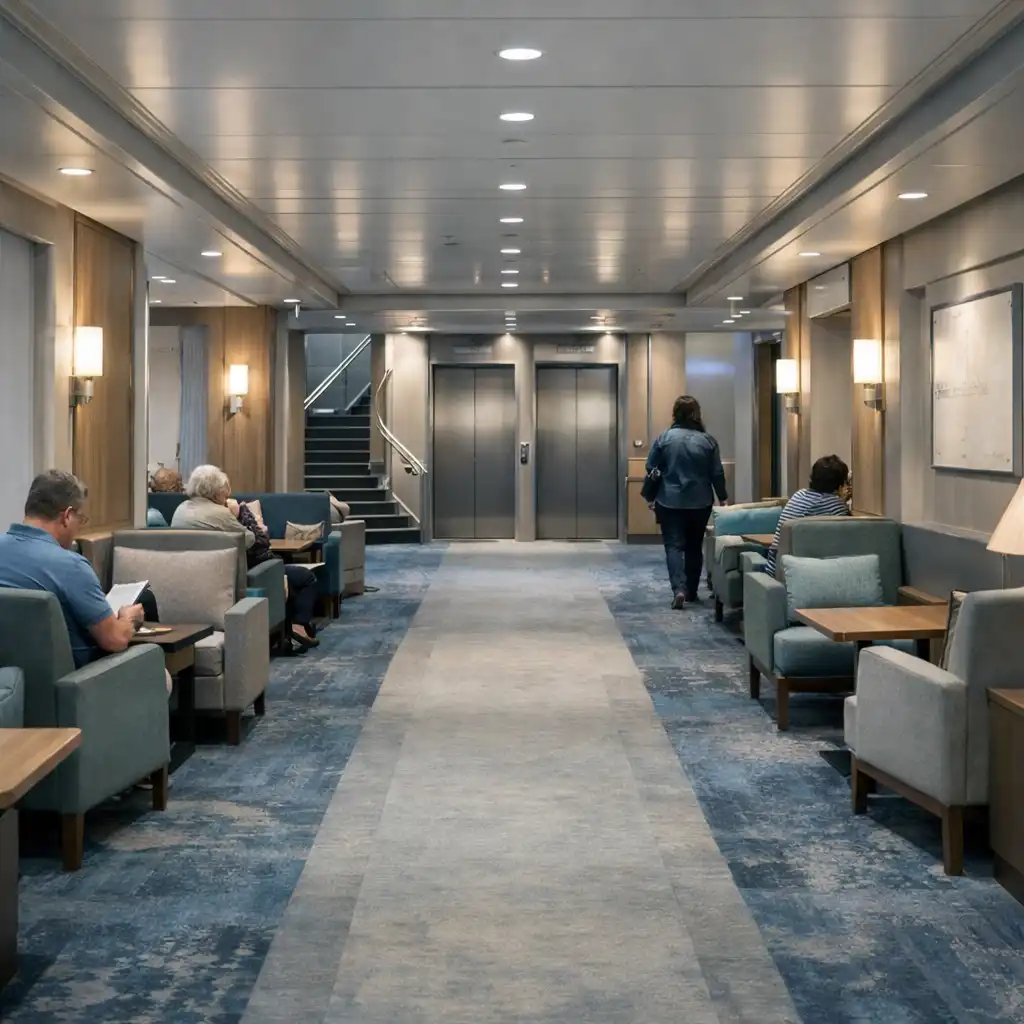
Cruise-ship lounge corridor with a clear central aisle, seating bays and a distant circulation landmark
Clear aisles and recognisable landmarks support quieter shared-space flow.
Sailing check / 07

Useful questions before you sail

Turn broad research into practical questions for your particular ship and sailing. These prompts help you verify details without assuming every vessel works the same way.

Location

Where are our cabin and key meeting points?

Confirm cabin deck, lift or stair access, meeting locations and useful landmarks. Groups can agree on one simple fallback point, then use the navigation and deck guide to read the route more confidently.

Timing

What needs a booking, assignment or time slot?

Check dining, shows, activities, supervised programs and services with limited capacity. Arrangements vary by ship and sailing, so treat booking requirements as a question to verify rather than a universal rule.

Fit

Which areas suit our group at different times?

Consider quiet spaces, family zones, outdoor decks, lounges, meal options and evening entertainment in relation to comfort and travel-party needs. A mix of shared plans and independent time can make the ship easier to enjoy.

Change

What changes on port days or in poor weather?

Look for venue changes, early departures, outdoor deck conditions, adjusted activities and event relocations in current onboard information. Weather and itinerary conditions may change a plan, so check onboard before heading out.

Access

What are the access and age notes for evening venues?

Confirm venue-specific access, opening windows, age limits and policies for lounges, shows and casino areas. For poker, roulette, blackjack, gaming tables and chips, use the Cruise Casino Guide; games and policies vary by vessel and sailing.

Space index / 08

A visual reference for onboard spaces

Ships are made up of connected interior, outdoor and transition spaces. Their practical value becomes clearer when location, timing and access are considered together.

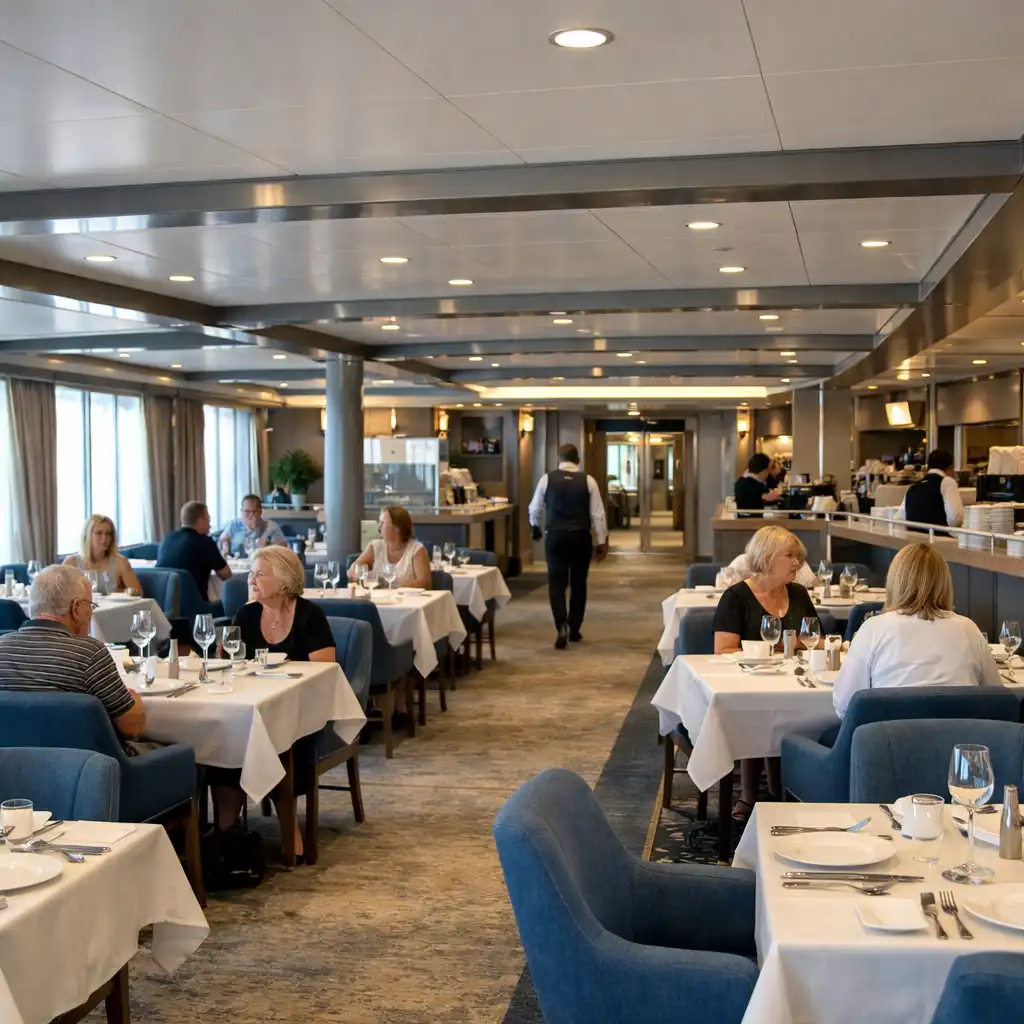
Cruise ship dining room showing table layout, central aisle, service direction and a distant entry point
Interior public spaces
Dining rooms, lounges, theatres, activity areas, service points and casino rooms are often part of an interconnected public-deck network. Explore cabins, dining and onboard spaces or read the casino guide for focused context.
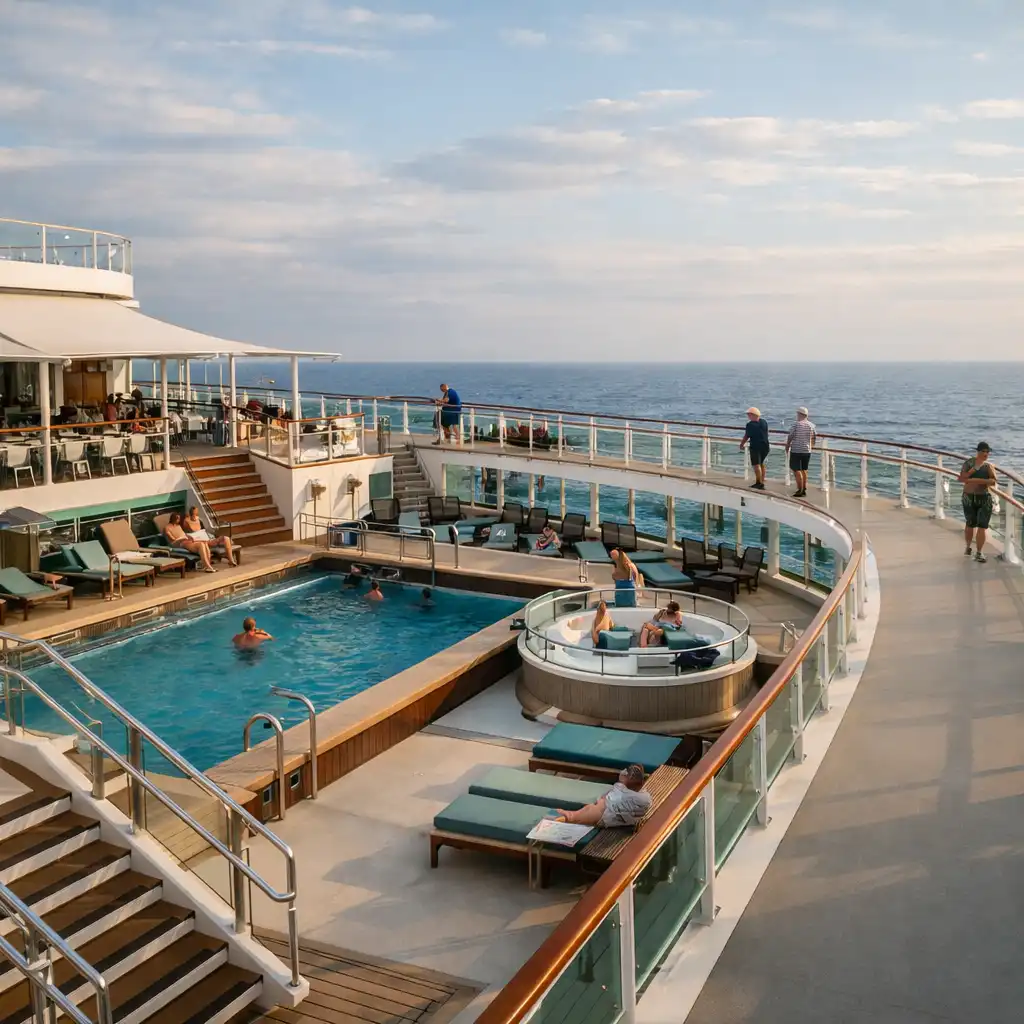
Cruise ship pool deck with a clear walking route, seating, stair access and horizon beyond the railings
Outdoor and transition spaces
Pool decks, promenades, exterior seating and thresholds between inside and outside are shaped by weather, sea conditions and the daily program. See facilities and navigation guidance.
Next route / 09

Continue with the guide that matches your plan

Choose a detailed guide according to whether your next question concerns comfort, practical support or moving around the ship. These routes keep the focus on usable information rather than booking or promotional claims.

Casino context

For poker, roulette, blackjack, gaming tables, chips, access notes and policy variability, read the Cruise Casino Guide. It treats casino areas as part of onboard entertainment research; age limits, opening times, games and policies can vary.