
Cabins
Your private base for rest, storage and window or balcony access. Compare inside, ocean-view, balcony and suite layouts alongside walking distance, outlook and likely noise exposure.
Compare cabin typesAboard Compass is an Australia-focused informational cruise-ship portal for travellers who want to understand a ship before sailing. Explore cabins, restaurants, bars, lounges, family spaces, pools, entertainment, deck infrastructure, ship services, navigation and general life at sea, including casino areas as part of onboard entertainment.
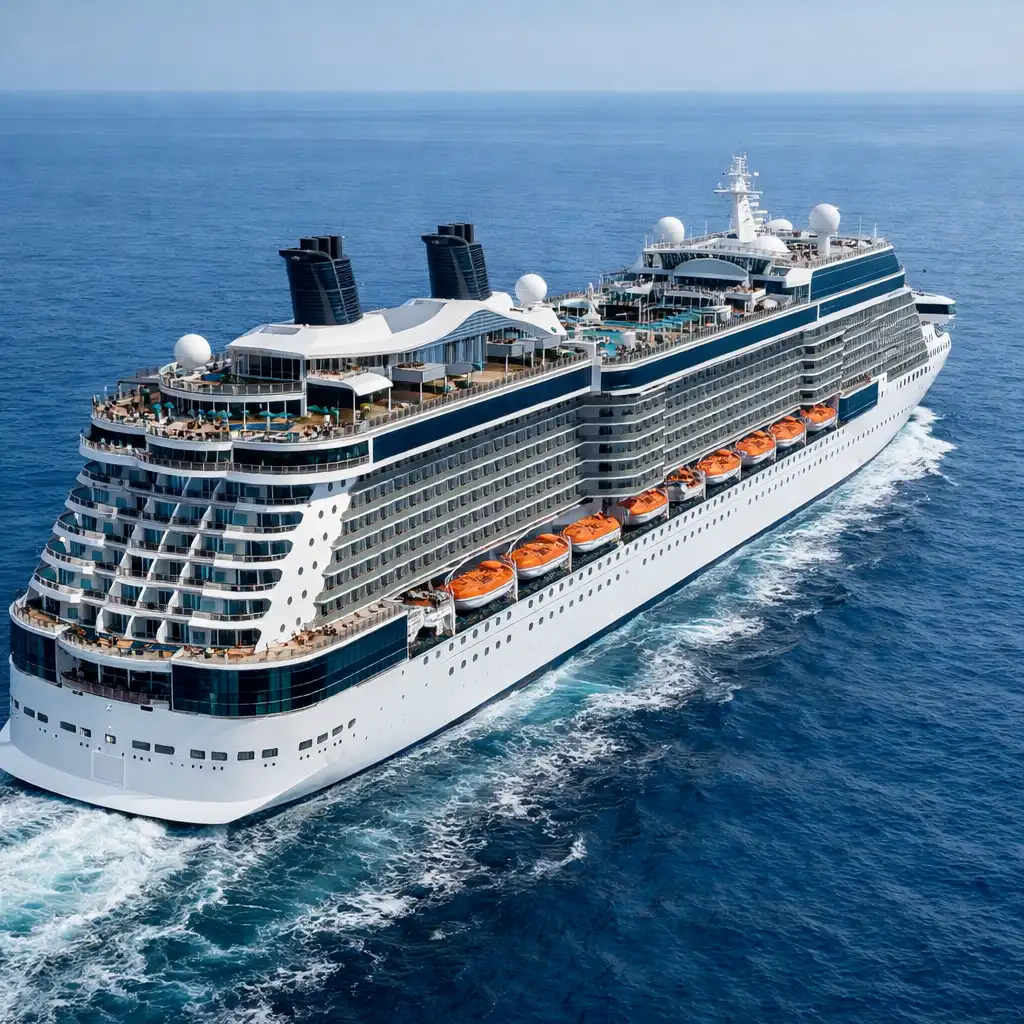
Ships are easier to research as linked zones: private accommodation, public venues, outdoor decks, service points and the routes between them. Start with the purpose of a space, then check its likely deck relationship, lift banks, stair towers and central corridors. Exact placement, access and operating details can differ by vessel and sailing.
Your private base for rest, storage and window or balcony access. Compare inside, ocean-view, balcony and suite layouts alongside walking distance, outlook and likely noise exposure.
Compare cabin typesMain restaurants, casual venues, speciality spaces and nearby bars can have different rhythms, access and opening windows.
See dining spacesTheatres, lounges, pools and family areas shape the day around programming, weather and nearby routes.
Explore resourcesPoker, roulette, blackjack, gaming tables and chips are covered as supervised onboard entertainment. Age rules, games, access and hours vary.
Read casino notesA useful ship overview begins with the routes between spaces, not with an assumption that every deck follows the same pattern.
Cabins are commonly arranged along accommodation decks, where lift lobbies and stair towers help guests judge walking distance and return to their room. Corridors are usually quieter transit space rather than destinations. When comparing a cabin, consider its relationship to lifts and to higher-activity public decks; the arrangement differs between vessels.
Read cabin guidanceRestaurants, bars, lounges, theatres and casino rooms are public-space categories that may cluster around central routes or sit in separate deck zones. Nearby venues can affect noise, foot traffic and evening atmosphere. Signage, deck plans and daily schedules are the practical connectors when moving between these interiors.
See onboard spacesPools, family areas, outdoor infrastructure and ship services connect to the same circulation network, but can have different weather exposure, crowd patterns and access routes. Reception, lifts and stairways are useful anchors when reading a plan. Use detailed facilities and navigation guides for ship-specific research.
View deck detailsBroad cabin names are a starting point. The more useful comparison considers light, outdoor access, layout, quiet and movement around the ship.
Inside cabins provide accommodation without a window or balcony and can suit travellers who see the room chiefly as a private base while spending much of the day in public spaces. Check the room layout, bed arrangement and distance to lifts. Details and categories vary by vessel.
Ocean-view cabins offer an exterior outlook, but the type of view and possible obstruction can vary. Check whether the outlook is fixed, partly obstructed or positioned at a particular deck level. The practical value is daylight and orientation, rather than a universal cabin experience.
Balcony cabins add private outdoor access, so deck position, weather exposure and nearby public areas become important map checks. Sailing conditions and location can shape how a balcony feels. Inspect the surrounding deck plan rather than assuming privacy or outlook will be identical across vessels.
Larger layouts may add separation between sleeping and living areas or other category-specific features. Inclusions differ by ship and line, so compare the actual deck plan and category description. A suite label alone does not confirm service tiers, dining access or exclusive facilities.
Food and drink spaces differ by timing, formality, location and the social role they play during a day at sea.
Main dining areas are places where meal timing, seating approach and dress expectations can be shaped by the ship’s programme. Check daily information and onboard guidance rather than assuming a fixed system. Their role is distinct from an all-day social space, and arrangements can vary by vessel or sailing.
Check onboardCasual food areas can be useful between activities, around pool or public-deck routines, or when a flexible pace matters. Location and opening patterns determine convenience; the nearest venue may not suit every time of day. Compare the venue with the deck activity around it.
Explore dining spacesBars and lounges may support conversation, music, pre-show waiting or a quieter break, depending on placement and programme. Note their proximity to theatres, dining rooms and open decks. Atmosphere and programming vary by vessel, so use nearby spaces as practical clues.
See nearby spaces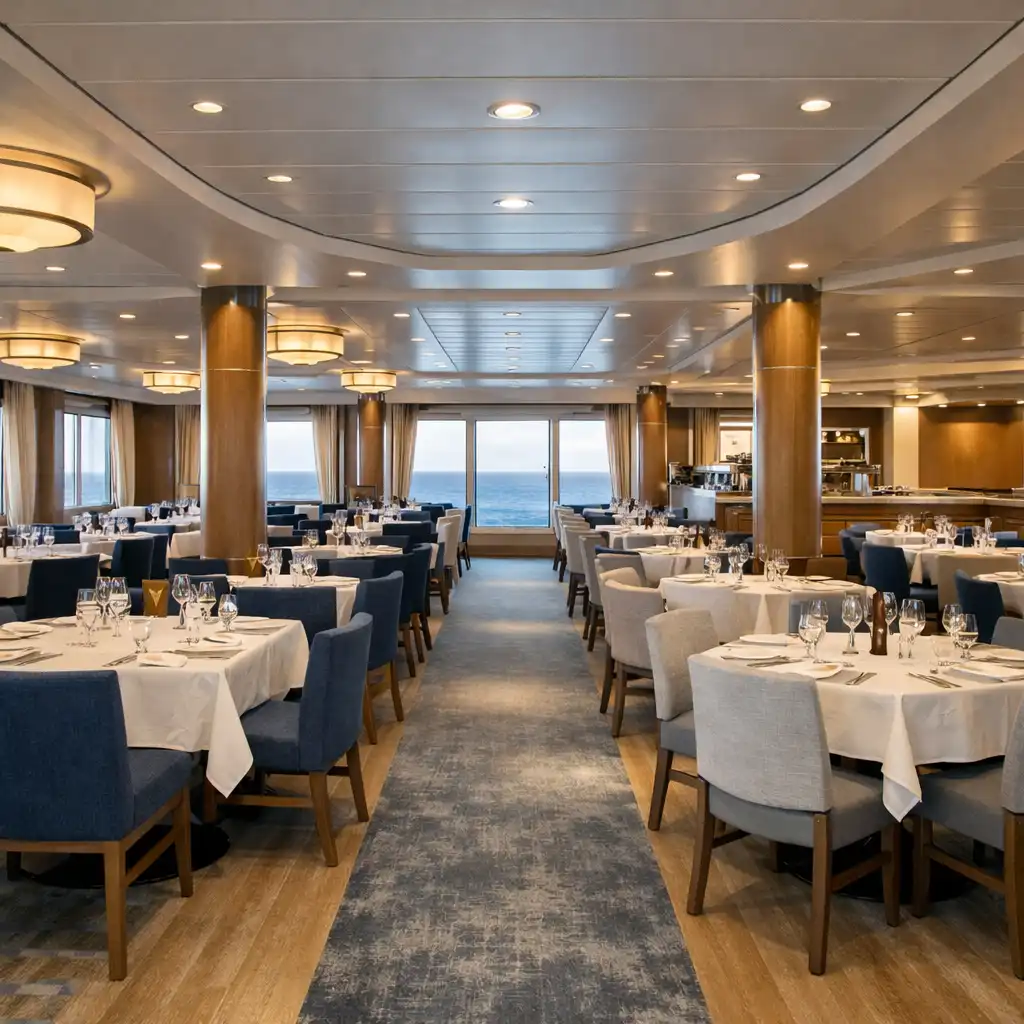
Use the ship’s programme and deck relationships to understand when a venue is likely to be useful, not just what it is called.
Theatres are destination spaces with timed programming, seating considerations and connections to pre-show lounges or central routes. Check the daily programme and arrival guidance onboard because formats and schedules vary.
Explore show resourcesLounges can shift between daytime seating, talks, live music or evening social time. Use daily listings and nearby-space clues rather than expecting a fixed activity or atmosphere.
Read lounge guidancePools are outdoor focal points where weather, family use, deck layout and nearby casual venues affect the experience. Consider shade, seating, access routes and busier periods.
See facilities guideResearch family areas through current ship information, age guidance and daily programming. Suitability can differ between venue types and scheduled activities, so check onboard.
Plan family timeCasino spaces are one adult-oriented entertainment area among many. This guide describes their practical setting without treating gaming as a financial opportunity.
Casino areas can be organised around gaming tables, machine areas, seating and service routes. Their design, location, opening hours and access vary by ship and sailing. Aboard Compass covers these spaces for navigation, ambience and practical expectations, rather than winning or spending. Use the dedicated guide for neutral context before relying on current onboard information.
Read the cruise casino guide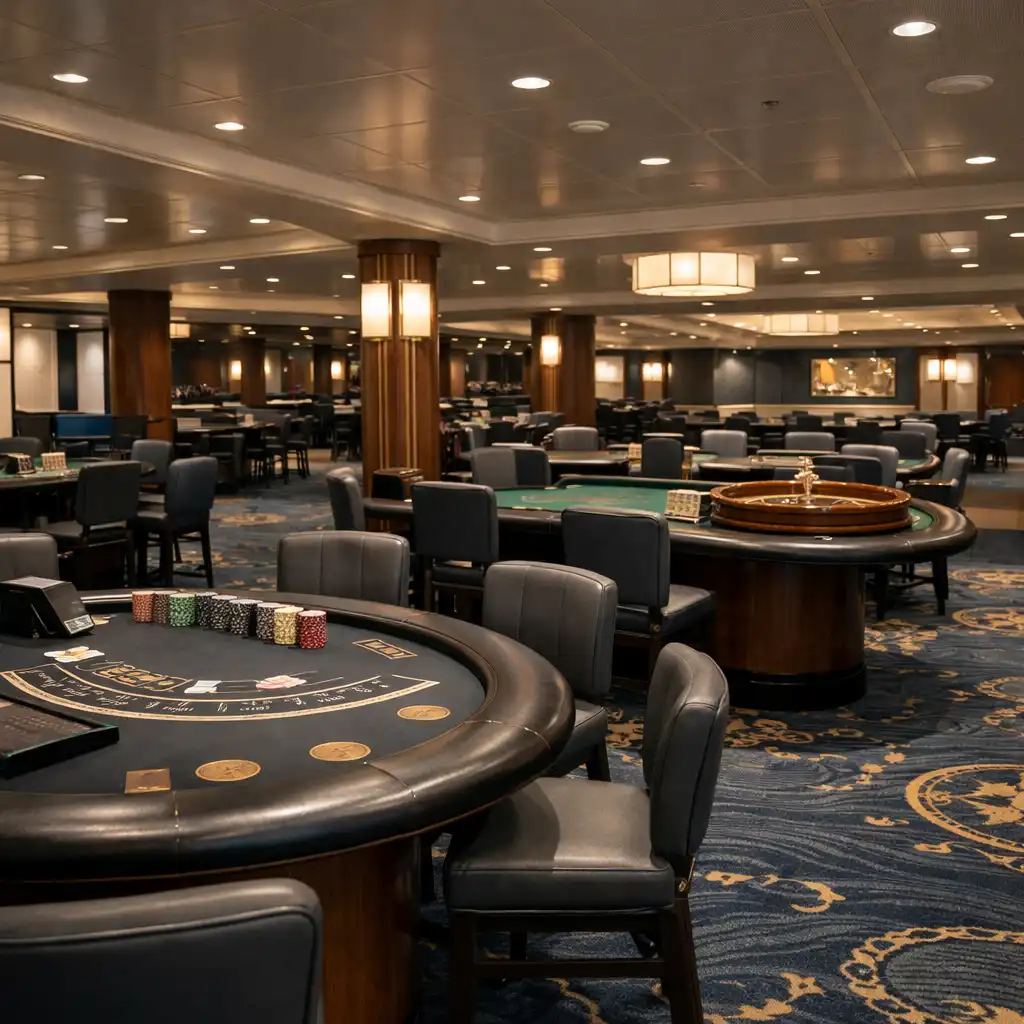
Poker may be offered in designated casino areas. Availability, formats, table limits and session timing depend on the ship. Tables, chips and dealer-led play are useful physical context, but current onboard details should confirm whether a game is running.
Check onboardRoulette is commonly recognised by its wheel, betting layout, chips and dealer-managed table process. This describes the space rather than a promise of availability. Confirm current operating details because table operation can differ by vessel and sailing.
Read casino contextBlackjack may sit alongside other dealer-led card tables, with seating, cards, chips and table signage providing orientation cues. Availability and operating periods vary onboard. The casino guide offers broader practical context without betting advice or encouragement.
Read access notesPre-sailing research explains the layout; current onboard information helps resolve the details that can change during a sailing.
Questions about current activities, access and service arrangements are best resolved through the ship’s current information and staffed service points. Their location varies by ship, making them a useful supplement to research completed before departure.
View service guidanceLift banks and stair towers are repeatable wayfinding anchors between cabins and public decks. Note the nearest vertical route when studying a plan, especially as lifts can be busier around meal and show times. Placement varies by vessel.
Read route guidanceFacilities, access and programme changes should be confirmed aboard. Connect this check with pool, dining, family and entertainment research, because opening windows and arrangements can vary by vessel or sailing.
See facilities notesChoose a detailed resource based on the part of ship life you need to compare, locate or understand next.
Compare cabin categories, restaurants, bars and lounges in one practical starting point for first-time ship research and everyday planning.
Read the guideRead neutral context on casino rooms, poker, roulette, blackjack, gaming tables and chips. Availability, age rules and operating details vary.
Read the guideUnderstand deck layouts, circulation and the physical logic of moving between cabins and public spaces.
Read the guideResearch practical facilities, service patterns, entertainment and life at sea through two complementary resources.
Check outlook, deck position and the relation to lifts, stairways and active public areas. Cabin position and nearby spaces vary by vessel.
Identify likely dining, pool, entertainment, family, lounge or casino areas, then inspect their relationship on the ship’s own plan. Exact location and access vary.
Confirm daily schedules, opening times, age guidance, venue access and any table-game availability through current onboard information.
Build your onboard plan from clear information. Aboard Compass helps travellers arrive with better questions and a clearer understanding of onboard spaces.
Explore onboard experience resources