Guide / onboard systems

Cruise ship facilities and services guide

A practical field guide to the facilities that support everyday life onboard, from reception and information points to accessibility routes, connectivity, laundry and convenience spaces.

Check onboard

Use this guide as a ship-reading tool

Pair it with the ship’s deck plans, daily programme and current cruise-line information. Look for guest services, lifts, medical care, laundries, accessibility routes and service counters; policies, pricing, access and hours can change by vessel or sailing.

01 / common-pattern map

The service map: where to look first

A ship is a network of public decks, cabins, services and navigation infrastructure. This schematic is not a vessel-specific plan; it is a way to notice the zones that commonly make the first day easier.

Central public deckZone 01

Central guest-service zone

Reception, account help, key-card concerns, excursion enquiries and general assistance are often concentrated near a main atrium or central public deck. The desk may be called guest services, reception or something similar. Note its location during embarkation: it is a useful reference point when you need directions or help. Facility names and opening windows can vary by ship or sailing.

Quieter support areaZone 02
Clinical service varies

Wellness and quieter support areas

Medical centres, spa reception, salons, libraries and quieter lounges may sit away from busy atrium routes, reached by signage and lifts from public decks. A medical centre is a clinical service, not a substitute for travel insurance or pre-travel medical planning. Medical facilities, staffing and availability vary by ship, while reading and relaxation areas are distinct from active entertainment zones.

Distributed linksZone 03

Convenience corridors and outer-deck links

Laundries, retail, pool-towel points, washrooms, lifts and stair towers may be distributed rather than grouped. Trace the route from your cabin to the nearest useful services on a deck plan, and follow wayfinding signs once aboard. Large ships can require a change of deck, and different lift banks may serve different ends of the vessel. Cruise ships are organised through decks, public spaces, services and navigation infrastructure.

Read deck guidance
02 / daily administration

Guest services and daily administration

The service desk is a useful starting point, but it is not always the team that completes every request. Knowing what to ask—and what to note—can reduce avoidable backtracking.

Admin

Accounts, cards and onboard questions

Guest services commonly helps with account queries, card or access concerns, directions and general onboard information. Keep your booking and cabin details accessible if you need assistance. Payment arrangements and card procedures are cruise-line specific, and specialist counters may handle some requests.

  • Have your cabin details ready.
  • Ask where a specialist request is handled.
Support

Practical requests and reported issues

You may seek help with a cabin concern, lost property, directions, an accessibility question or a request to reach the right team. Give a clear, factual description of the issue and its location. Resolution times depend on the request and operating conditions, and service availability can vary by vessel or sailing.

  • Note the location and timing.
  • Keep any relevant details together.
Planning

Choosing a calmer time to visit

Check the daily programme and onboard information channels where available, and do not assume the desk will be quiet around embarkation or a return from shore. For non-urgent questions, dealing with them early can be simpler. Actual desk hours and arrangements are a Check onboard detail.

See onboard resources
Timing note

Busy periods are a planning consideration, not an official rule. Use the current programme and signs on your ship to decide when a non-urgent visit makes sense.

03 / support needs

Health, accessibility and support needs

Researching practical support before choosing a ship gives you better questions to ask and a clearer route through unfamiliar public decks.

Check onboard

Medical centre: useful, but ship-specific

Many ships have a medical centre or similar onboard clinical facility, but staffing, hours, equipment and scope can vary. For urgent concerns, follow shipboard instructions. Discuss pre-existing needs with appropriate professionals and the cruise line before travel, and review insurance and current cruise-line documentation independently. This guide prepares practical questions; it does not provide medical advice or make claims about emergency capability.

Mobility and accessible routes

When comparing ships or cabins, research accessible options, lift locations, deck transitions, seating, washrooms and routes to frequently used spaces. Layouts differ considerably across vessels. Use available deck plans to trace a cabin-to-dining, public-deck and information-point route; do not assume every route or venue is step-free.

  • Check routes before you book.
  • Identify storage and mobility-equipment questions.

Family and sensory considerations

Families and travellers with sensory or support needs may benefit from locating quieter areas, family facilities, dining alternatives and service points before busy periods. Programmes and spaces vary by ship, so use the dedicated guide as a starting point for questions rather than evidence of a specialist service.

Explore family spaces

Ask early, confirm close to sailing

Plan: ask about accessible routes, storage needs, dietary-service processes, medical arrangements or mobility equipment policies while choosing a sailing.

Confirm: review current cruise-line information because access and service arrangements can vary by ship and sailing.

04 / current information

Connectivity, communications and shipboard information

Staying oriented at sea is usually less about one device and more about knowing where the current information lives on your particular ship.

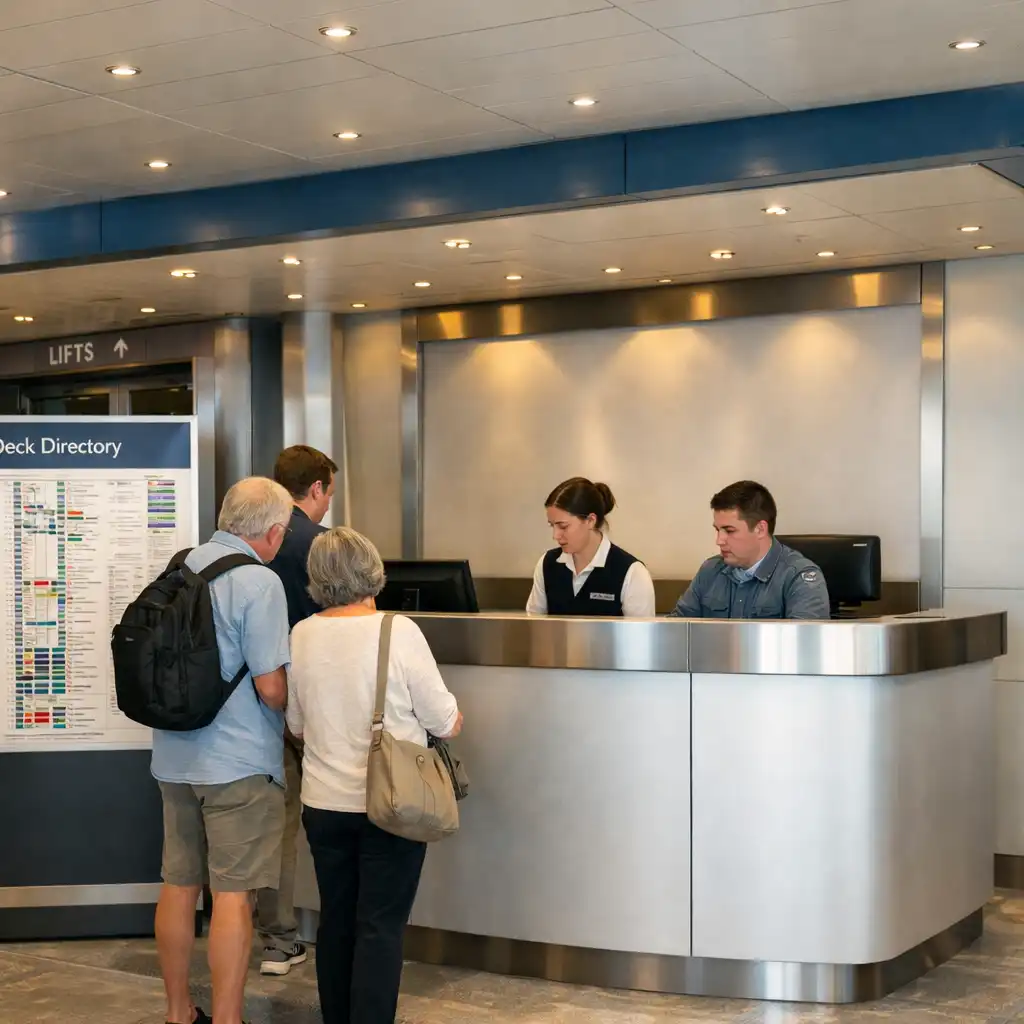
Cruise ship guest-information counter with deck directory and nearby circulation route
A practical information point can anchor your first-day orientation.
Current information

The daily programme is the working timetable

A daily programme, digital schedule or similar onboard information source commonly helps guests track venue times, activities, port-day changes and practical notices. Check the current version rather than relying on an earlier day’s schedule. The format—paper, app, screens or another system—can vary by cruise line and ship, and it is an orientation tool rather than an exhaustive guarantee.

Internet and mobile expectations

Research onboard internet for inclusions, device rules, coverage and suitability for your needs, particularly between ports and at sea. Avoid assumptions about performance or packages; review current cruise-line information and consider roaming arrangements separately. Internet access and terms vary by ship, itinerary and sailing.

Research
Suitability for your needs
Confirm
Current terms for your sailing

Finding messages, notices and meeting points

Public screens, cabin communications, service desks, printed materials and signs can all contribute to wayfinding, but their use differs by ship. Note important venue names and deck numbers rather than relying only on memory, and check meeting locations against current shipboard information.

DECK 07 / ATRIUM / PORT LIFTS

A simple first-day information routine

  1. Find the current schedule.
  2. Identify key deck routes.
  3. Confirm reservations or support arrangements.
  4. Note essential venue locations.

Exact shipboard systems vary by vessel and sailing, but this sequence keeps the first day focused on useful reference points.

Read experience resources
05 / everyday facilities

Laundry, retail and everyday convenience

Small service decisions can matter most on a longer sailing. Treat them as planning factors, not features to assume will be identical across ships.

01 / Laundry

Laundry options

Laundry arrangements can range from self-service areas to paid collection or other ship-specific options. Check what your vessel provides before packing, particularly for trip length, family needs and cabin storage. Do not assume a machine, service type or price is standard; locate current laundry information in ship or booking documentation.

  • Consider clothing routines.
  • Confirm the available option.
02 / Retail

Shops and essentials

Onboard retail is a convenience area whose range, hours and stock can vary. It is not a substitute for packing essentials or shore-based shopping. Venue locations may appear on deck plans or daily information, but retail offerings and opening times vary by ship and itinerary.

Expect variation: check current ship information.

03 / Convenience

Towels, washrooms and small practical stops

Pool-towel points, public washrooms, water stations or similar conveniences may be positioned around high-use public areas, but placement and terms are ship-specific. Notice them on the first full day and connect them to deck circulation, lifts and stair routes rather than assuming an amenity is adjacent.

04 / Prepare

Packing for the service pattern you expect

Plan for likely routines, then confirm any service that matters before departure. Useful questions can cover laundry access, mobility items, connectivity needs and cabin storage. Cruise-line policies and onboard services can differ by ship and sailing.

Confirm before sailing
06 / shared spaces

Pools, fitness and relaxation support

The service layer around active and restorative spaces helps you choose a workable place and time, without assuming a universal set of rules.

Access may vary

Shared spaces need a practical read

Pools, fitness areas, spas and relaxation zones are communal spaces with access conditions, opening windows, age guidance, towel arrangements or booking processes that can differ by ship. Use current onboard notices and venue signage. For detailed research on public spaces, continue to the dedicated onboard spaces guide rather than treating any one arrangement as standard.

Explore onboard spaces
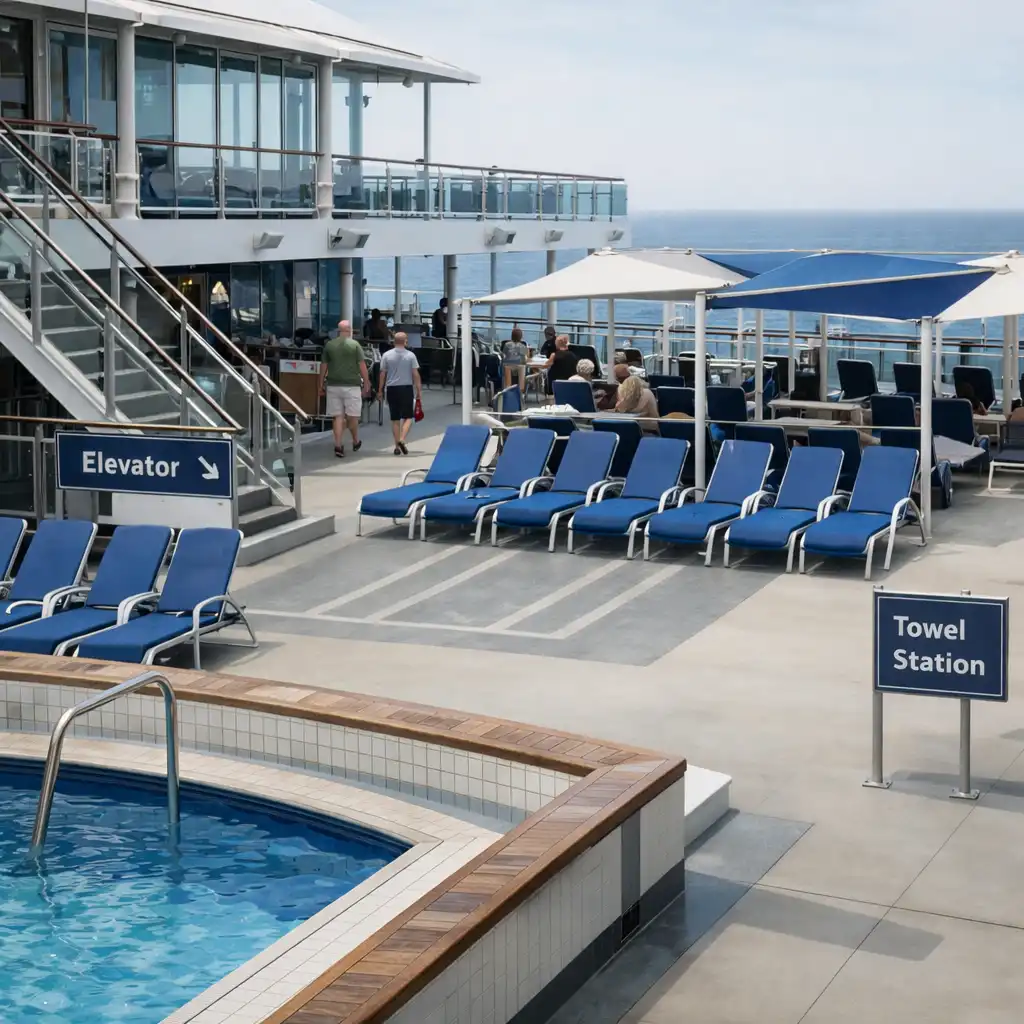
Cruise ship pool deck with stair access, shade structures and wayfinding features
Look for routes and practical landmarks around a shared public deck.

Pool-deck essentials

When choosing a place outdoors, locate:

  • Towel points
  • Shade
  • Washrooms
  • Nearby food or drink service
  • Lift or stair access

Deck layouts and nearby services vary by ship.

Fitness and spa bookings

Service
Fitness, classes, appointments or salon support
Check
Current access, bookings and charges
Timing
Confirm early if time-sensitive

Rules and availability vary by ship and sailing.

Quiet-space alternatives

A busy pool deck may not suit every traveller. Depending on layout, lounges, libraries or lower-traffic outdoor areas can offer an alternative. Explore related areas without assuming a particular quiet venue exists on every ship.

07 / access framework

Service access: included, booked, restricted or variable

Use these four states to read onboard information carefully. They describe questions to ask, not fixed labels for individual facilities.

State 01

Included or generally available

Some common public facilities may be broadly available, but operating conditions, location and access guidance still need checking for your sailing. Public availability is not the same as unrestricted access at all times; current onboard information is the final reference.

State 02

Booked or timed

Appointments, classes, certain activities or specialised services may need a time slot, and demand can shape the experience. Identify time-sensitive needs early, but do not assume when booking opens or how it is completed. Booking arrangements vary by ship and sailing.

What to doConfirm the current process
State 03

Restricted or suitability-led

Access can be shaped by age guidance, health and safety rules, dress expectations, mobility considerations or venue purpose. Casino areas are one adult-oriented entertainment area among many, so follow current onboard rules and signage. Age restrictions and policy can vary; check onboard.

State 04

Variable by ship, itinerary or sailing

Deck layouts, port patterns, weather, staffing, maintenance and cruise-line policy can affect what is open, where it is located or how it is used. Use this guide to form questions, then verify the current specifics for your vessel and sailing.

What to doCheck onboard
08 / before departure

Before you sail: a practical services checklist

Confirm the services that affect your own trip, then make a short orientation note after embarkation so useful locations are easier to find.

Confirm the services that affect your trip

  1. Have you checked accessible routes or equipment needs relevant to you?
  2. Have you considered medical needs and current cruise-line information?
  3. Have you confirmed laundry arrangements for your trip length?
  4. Have you reviewed connectivity needs and roaming separately?
  5. Have you considered cabin location against key spaces and routes?
  6. Have you checked bookings and family requirements that matter to your group?

Compare ship information, booking documents and current cruise-line advice. Facilities, policies, access and schedules can vary by ship and sailing.

First-day note

Make a first-day orientation note

After embarkation, note the guest-services location, nearest lifts or stairs, dining route, current daily information source and any confirmed support or booking arrangements. This small routine can reduce repeated backtracking on an unfamiliar ship.

Read deck guidance
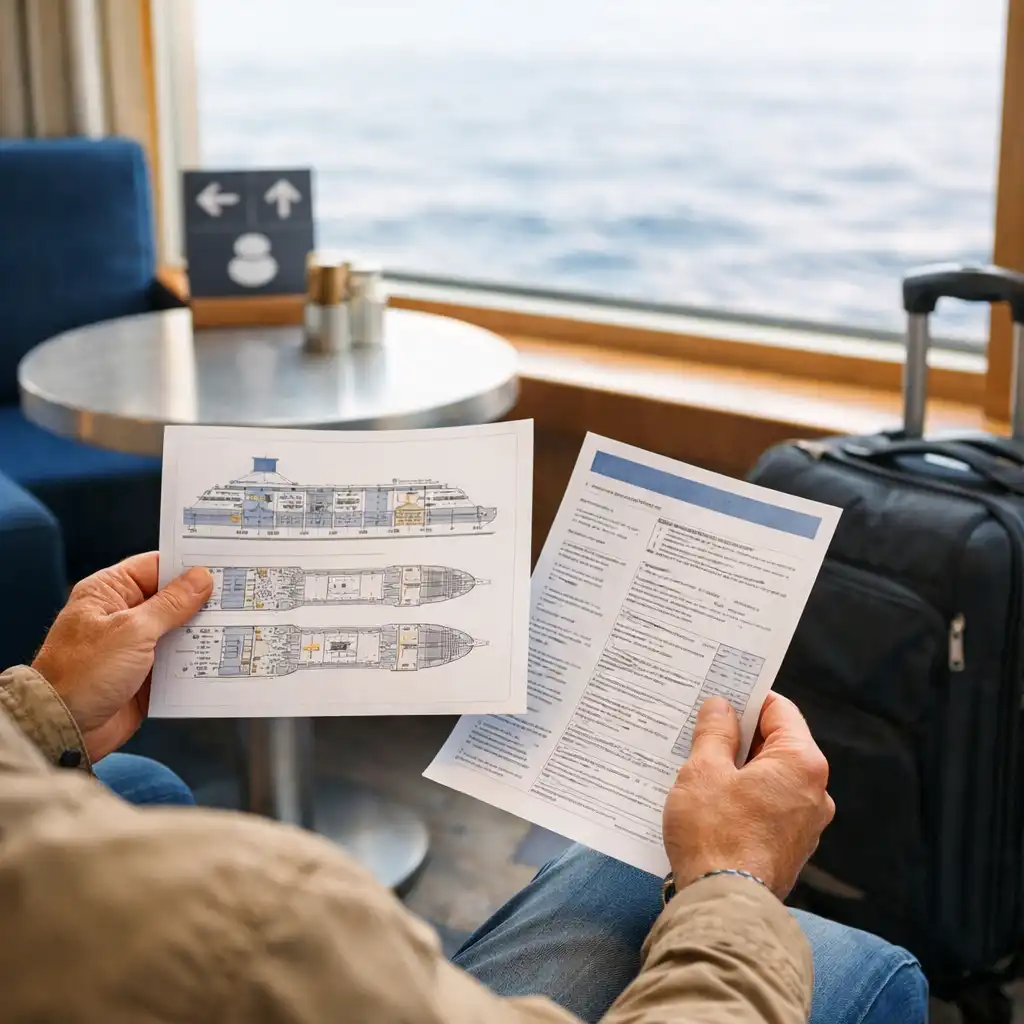
Traveller reading a printed cruise ship deck plan in a quiet lounge
Current information and a simple route note are useful companions on an unfamiliar ship.

Use current ship information as the final check

This guide helps you prepare questions and improve orientation. Current onboard notices and cruise-line details govern the specific sailing, including schedules and access.